“Great Cities of Islam Through History 2”: Madinah — Where the First Islamic State Was Born
Lyla HamdanInFor New Muslims|10/28/2026
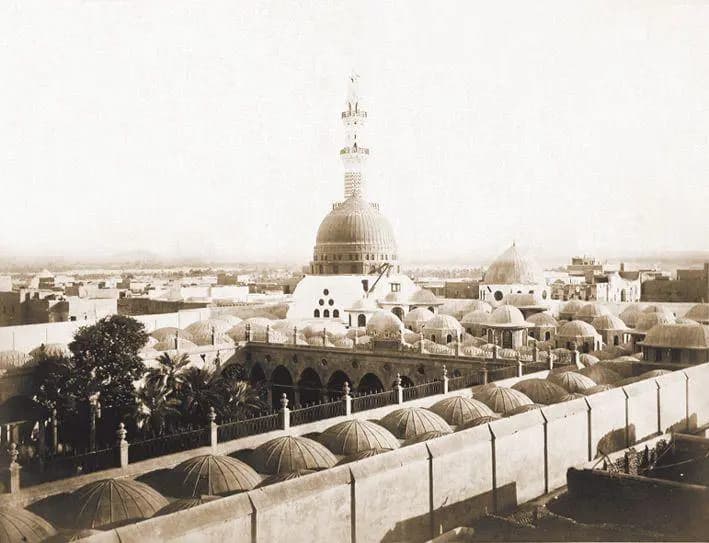
If Makkah is the cradle of revelation and the direction toward which Muslims pray, then Madinah is the place where the Islamic mission took shape as a state, a society, and a civilization. It was here that Islam moved from a period of persecution and vulnerability to the building of an Ummah. Here, the Prophet Muhammad ﷺ spent the final years of his life; from here, armies, envoys, letters, and messages were dispatched; here, the Companions gathered around the Messenger of Allah ﷺ; and from here emerged a state that would soon expand beyond the Hijaz and reach far into the wider world.
Before Islam, the city was known as Yathrib. After the Hijrah, however, its identity became closely associated with the Prophet ﷺ, and it came to be known as “the City of the Messenger of Allah,” as well as Taybah, Tabah, and other names preserved in the books of Hadith and Islamic history.
Madinah lies in western Saudi Arabia, in the heart of the Hijaz region. Official sources describe it as the first capital in the history of Islam.
The Prophet’s Mosque — the heart of Madinah and a center of government and learning since the Hijrah.
Yathrib Before Islam: A City Awaiting Its Great Transformation
Yathrib was far from an insignificant settlement before Islam. It had an established agricultural life, date-palm groves, and relatively fertile land compared with the surrounding environment. It was also home to a number of different communities, including the Aws and Khazraj tribes as well as Jewish tribes.
Years of conflict between the Aws and Khazraj had exhausted the city, until the message of Islam opened a new path before its people. Contact between the inhabitants of Yathrib and the Prophet ﷺ began during the pilgrimage seasons in Makkah, followed by the two Pledges of al-Aqabah, which laid the political and social groundwork for the Hijrah.
The Hijrah, then, was not merely the movement of individuals from one city to another. It was a historic transition from the stage of preaching the message to the stage of building a state.
The Hijrah: The Moment That Changed the History of Madinah
In 1 AH/622 CE, the Prophet ﷺ arrived in Yathrib after the journey of the Hijrah, which became the starting point of the Hijri calendar. The people of the city welcomed the Prophet ﷺ and the Muhajirun, and Yathrib became the center of the emerging Islamic state.
From that moment, the city entered an entirely new phase. The Muhajirun, who had left Makkah behind, found in the Ansar a community that embraced and supported them. A new bond emerged, transcending older tribal loyalties.
Here, a new concept of belonging took shape — one rooted in faith, brotherhood, and a shared social order.
The Prophet’s Mosque: The Heart of the First Islamic State
Building the Prophet’s Mosque was among the first things the Prophet ﷺ undertook after arriving in Madinah in 1 AH/622 CE.
The mosque was not merely a place of worship. It became the center of the new Islamic society. There, prayers were performed, verses of the Qur’an were recited, circles of learning were held, delegations were received, directives were issued, and matters concerning society and the state were discussed.
The mosque was also associated with Ahl al-Suffah, a group that included poor Muhajirun and seekers of knowledge.
Madinah thus became an early model of the Islamic city, in which the mosque stood at the center of education, justice, administration, worship, and social life.
At the heart of the Prophet’s Mosque remains the blessed Rawdah, about which the Prophet ﷺ said:
“What is between my house and my pulpit is a garden from the gardens of Paradise.”
The Prophet’s Mosque before later expansion projects.
Brotherhood and the Charter of Madinah
The new state faced a challenge greater than the construction of a mosque: it had to build a society capable of withstanding the threats surrounding it.
The bond of brotherhood established between the Muhajirun and the Ansar laid the foundation for a new social relationship. This was followed by the Charter of Madinah, which regulated relations within the community and defined responsibilities, rights, and obligations.
Madinah thus became the first organized Islamic political experience, where the earliest institutions of the state began to take shape within a society that brought together the Muhajirun, the Ansar, and other communities already living in the city.
Madinah: Capital of Jihad and the Defense of the State
Madinah was not only a center of knowledge and worship. It was also the military capital of a newly established state facing repeated threats.
From Madinah, the Muslims set out for Badr in 2 AH/624 CE, Uhud in 3 AH/625 CE, and the Battle of the Trench in 5 AH/627 CE.
During the Battle of the Trench, the threat reached the very heart of Madinah, turning the city itself into the decisive defensive front of the Islamic state. After the battle, the balance of power gradually began to shift, and the state based in Madinah became increasingly capable of asserting its presence across the Arabian Peninsula.
Delegations, military expeditions, and letters to tribes and rulers also departed from Madinah. A small capital in the Hijaz was steadily transformed into a political center connected to vast parts of Arabia.
From Madinah, a State Reached the Wider World
After the conquest of Makkah in 8 AH/630 CE, the Islamic state was no longer confined to the area between Madinah and Makkah. Arab tribes began entering Islam one after another, while the state continued to expand both politically and religiously.
When the Prophet ﷺ passed away in 11 AH/632 CE, Madinah remained the center of the Caliphate. At Saqifah Bani Sa’idah, Abu Bakr al-Siddiq, may Allah be pleased with him, was pledged allegiance as Caliph.
From Madinah, the campaigns of the Ridda Wars were launched, followed by the great expansion of the Islamic state beyond the Arabian Peninsula.
During the caliphates of Abu Bakr, Umar, and Uthman, may Allah be pleased with them, Madinah remained the center of decision-making for a state whose territory expanded at remarkable speed. Throughout this period, the city served as the capital of the Rashidun Caliphate, directing the expansion of the Muslim state and administering its growing affairs.
Madinah: The School of the Companions and Successors
Yet the greatest legacy Madinah left behind was neither military power nor politics. It was knowledge.
Within the Prophet’s Mosque emerged one of the greatest centers of learning in Islamic history. The Companions received the Qur’an and Sunnah from the Prophet ﷺ and transmitted them to the generation of the Tabi‘un, and from them to those who followed.
Among Madinah’s most prominent scholars and transmitters were Abu Hurayrah, Abu Sa’id al-Khudri, Zayd ibn Thabit, and Aisha, may Allah be pleased with them. They were followed by leading scholars among the Tabi‘un, including Sa’id ibn al-Musayyib, Urwah ibn al-Zubayr, and al-Qasim ibn Muhammad, as well as generations of imams and scholars associated with the Madinan school.
Madinah became a major center for the sciences of Hadith, jurisprudence, and the Prophetic biography. In later centuries, the practice of the people of Madinah would also become one of the major jurisprudential principles discussed within the Maliki school.
Madinah, therefore, was not merely a political capital. It was an open university without walls, attracting seekers of knowledge from across the Muslim world.
Madinah After the Capital Moved Elsewhere
In 41 AH/661 CE, the capital of the Umayyad state moved to Damascus, and Madinah was no longer the seat of the ruling Caliph.
Yet this did not diminish its religious or scholarly status. The Prophet’s Mosque remained a destination for scholars and pilgrims, while Madinah continued to be inseparably linked to the memory of the Prophet ﷺ and his Companions.
Visiting the city also became a deeply established part of the journey to the Hijaz for generations of Muslims.
Over the centuries, Madinah underwent numerous political and architectural transformations. Walls and fortifications were constructed to protect it from raids, while the Prophet’s Mosque underwent successive expansions.
Landmarks That Still Carry the Memory of Islam
Today, Madinah is home to some of the most important Islamic and historical landmarks in the world: the Prophet’s Mosque, Quba Mosque, the Mosque of the Two Qiblahs, Mount Uhud, and al-Baqi Cemetery, alongside many other locations associated with the Prophetic biography and the early battles of Islam.
Quba Mosque is among the most prominent of these sites. It is closely connected to the beginning of the Hijrah and is described in historical sources as the first mosque built in Islam.
Quba Mosque.
Mount Uhud, meanwhile, remains a witness to one of the most famous battles of early Islamic history, while al-Baqi preserves the memory of generations of the Companions, members of the Prophet’s family, and scholars of Madinah.
Madinah: Here Walked the Messenger of Allah
With every step, visitors sense the profound majesty of the place. This is the land upon which the Messenger of Allah ﷺ and his Companions once walked.
This is Madinah: the city of Prophethood and the first Islamic state, the home of the Hijrah, and the school of the Sunnah.
Makkah was the place where revelation descended; Madinah was where the message took visible form as a society, a state, and a civilization.
For this reason, Madinah deserves its place as the second city on our map of “Centers of Islam Through History.” From here, the Prophet ﷺ carried his message to the wider world; from here, the Rashidun Caliphate was administered; and from here, the Qur’an and Sunnah spread far and wide.
Across the centuries, Madinah has remained one of the greatest centers of the Muslims’ religious, historical, and scholarly memory.
Aslam Muhammad
Related Articles
Great Cities of Islam Through History 3: Jerusalem — A City That Weeps for a Glory That Will Never Die
Great Cities of Islam Through History 3: Jerusalem — A City That Weeps for a Glory That Will Never Die
Lyla Hamdan
“Great Cities of Islam Through History 1”: Makkah — From the House of Allah Began the Story of an Ummah
Islamic civilization was never the story of a single state, a single capital, or a single age. It was a long journey through cities and great urban centers stretching from Makkah and Madinah to Jerusalem, Damascus, Baghdad, Cairo, Kairouan, and Córdoba, and onward to Bukhara,
Lyla Hamdan