“Great Cities of Islam Through History 1”: Makkah — From the House of Allah Began the Story of an Ummah
Lyla HamdanInFor New Muslims|09/28/2026
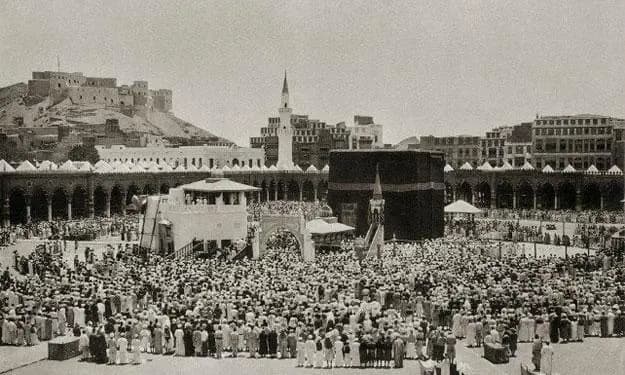
Islamic civilization was never the story of a single state, a single capital, or a single age. It was a long journey through cities and great urban centers stretching from Makkah and Madinah to Jerusalem, Damascus, Baghdad, Cairo, Kairouan, and Córdoba, and onward to Bukhara, Samarkand, Delhi, Timbuktu, Malacca, Istanbul, and many other cities that left their mark on the history of Islam.
From here begins the series “Great Cities of Islam Through History.” We open the map of the world not in search of the cities most famous today, but of those that, at one point in history, were beating hearts of the Muslim world — cities that carried the banner of the Caliphate, hosted circles of learning, Hadith, and jurisprudence, served as centers of trade, stood as strongholds of jihad and defense, or became gateways through which the Islamic message and culture reached new peoples and regions.
We begin with Makkah al-Mukarramah — the place where revelation descended and the direction of prayer for Muslims — before continuing our journey to the other great cities that shaped different chapters of Islamic history.
In each city, we will ask: Where was it located? When did it reach its height? Why did it become a major center? Who were its scholars and leaders? What sciences and books did it produce? And what remains of it after states changed and the maps of the world were redrawn?
This series is not a search for the glories of the past merely for the sake of pride, nor is it a dry narration of dates. It is an attempt to discover how Islamic civilization was built, how cities became centers of knowledge, power, trade, and culture, and how their influence has remained present to this day.
It is another map of the world — a map drawn by Muslims through knowledge, architecture, travel, trade, and jihad, whose cities left behind pages that still deserve to be read.
Makkah — Here Revelation Began, and From Here Islam Set Out
Before Makkah became a city visited by millions from the farthest reaches of East and West, it was a city unlike any other. Its greatness was not made by rivers, fortresses, or empires; rather, its status was shaped by the Sacred House of Allah.
From this spot nestled among the mountains of the Hijaz began one of the greatest transformations in human history. It was in Makkah that revelation descended upon the Prophet Muhammad ﷺ. From it the Islamic call emerged; toward it Muslims turn five times every day; and from it came the message that soon crossed the boundaries of the Arabian Peninsula to become a global civilization.
Makkah’s status in the Islamic understanding is connected to a history far older than the mission of the Prophet Muhammad ﷺ. It is the city associated with Ibrahim and Ismail, peace be upon them, and with the building of the Sacred House and the raising of its foundations.
Over the centuries, the House became a destination for the Arabs, while Makkah became a center of pilgrimage and a seasonal gathering place for the tribes. The city thus developed into a rare space where religion, trade, security, and social status came together.
The sanctity of the Haram preserved Makkah’s special status as a place of security, giving the city a major advantage in a tribal environment where warfare was a recurring part of life.
In Surah Quraysh, the Qur’an presents a concise picture of the role Makkah played in the life of Quraysh. The winter and summer journeys were connected to commercial activity, while the presence of the Sacred House provided religious prestige and security that helped sustain trade. Makkah, therefore, was not merely a center of worship; it was also a point of connection between trade routes linking the south of the Arabian Peninsula with its north.
Quraysh — When Makkah Became a Center for the Arabs
Makkah reached a more organized stage with the rise of Quraysh, particularly during the time of Qusayy ibn Kilab, whose name became associated with organizing the affairs of Makkah and bringing Quraysh together around the Haram.
Institutions emerged to administer the city and serve the pilgrims, including Siqayah — providing water to pilgrims — Rifadah — feeding them — and Hijabah — custodianship of the Kaaba. Dar al-Nadwah also served as a meeting place where the leading men of Quraysh gathered to deliberate over their affairs.
In this way, Makkah developed into a city whose influence exceeded its geographical size. Pilgrims came to it for worship, merchants came to its markets, the tribes recognized its standing, and Quraysh possessed a broad network of relations with the Arab tribes.
Makkah, then, was already a religious, commercial, and political center in the Arabian Peninsula before Islam.
The Year of the Elephant — The Haram Confronts Power
Among the events that cemented Makkah’s place in Arab and Islamic memory is the story of the Abyssinian ruler Abraha’s attempt to reach Makkah and destroy the Kaaba, an event associated with Surah al-Fil.
Islamic sources relate that Abraha’s army set out from Yemen toward Makkah, but that his campaign ended before achieving its objective, in an incident that became one of the most prominent events connected with the history of the Sacred House.
It was in that year, according to the widely held view among historians and scholars of the Prophetic biography, that the Prophet Muhammad ﷺ was born in Makkah. No one could have imagined that the child born in that small city would become a Messenger carrying a message that would reshape the course of human history.
Here Revelation Began
In Makkah, in the Cave of Hira, came the moment that changed history. Muhammad ﷺ had reached the age of forty when Jibril, peace be upon him, came to him with the first revelation, marking the beginning of the revelation of the Noble Qur’an.
From that moment onward, Makkah was transformed from a center of trade and pilgrimage into the birthplace of the Islamic message.
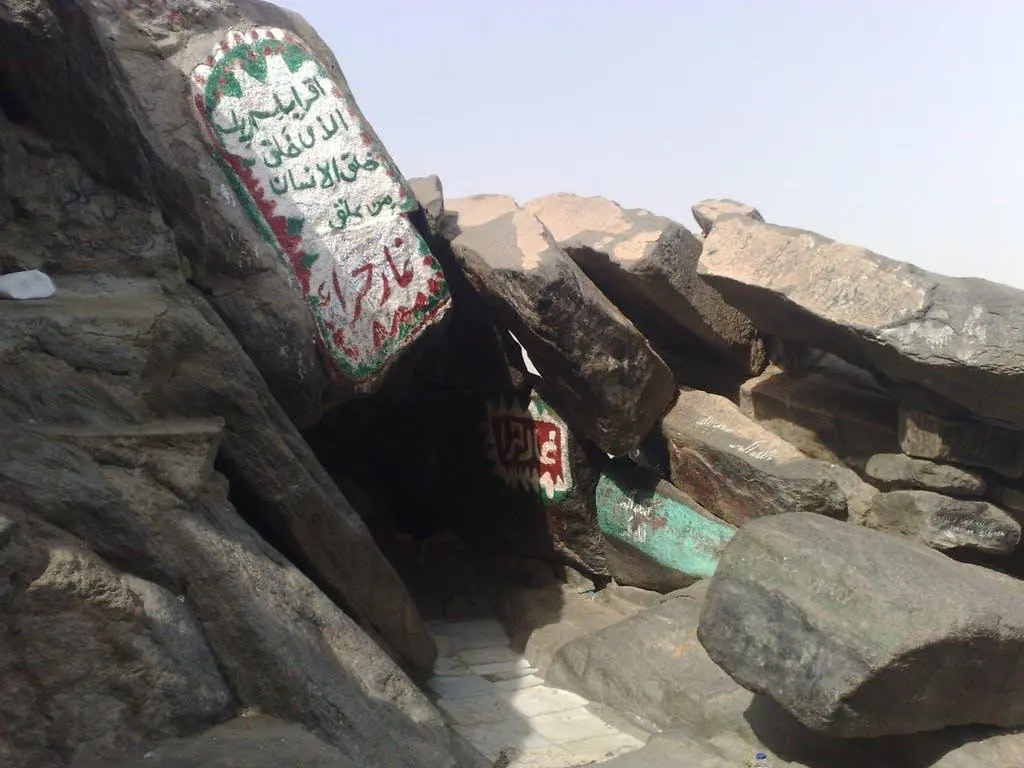
Hira Cave
The Prophet ﷺ called his people to worship Allah alone and abandon the worship of idols, but the message collided with the religious, social, and economic order that had developed around Makkah.
Quraysh’s resistance to Islam was not merely a religious disagreement. The Makkan elite saw the new message as a challenge to a religious and social system closely tied to Makkah’s status and to the influence of Quraysh.
Years of Trial — Yet Islam Spread Despite the Siege
Pressure on the Muslims intensified. The vulnerable among them were subjected to torture, while the Prophet ﷺ and his Companions faced various forms of persecution and boycott. Yet the call did not stop.
Men and women from Makkah and beyond embraced Islam. Dar al-Arqam became one of the places associated with the secret and early phases of the Islamic call, while Islam gradually began to spread beyond Makkah.
Then came the Hijrah to Madinah in 1 AH / 622 CE, transferring the political leadership of the emerging Islamic state to Madinah. Yet Makkah did not lose its status. The Kaaba remained the direction of prayer for Muslims, while liberating Makkah and returning to it remained central to the course of the Islamic mission.
Badr — The Long Road Back to Makkah
After the Hijrah, the Muslims and Quraysh entered a series of military and political confrontations. The Battle of Badr came in 2 AH / 624 CE, followed by Uhud in 3 AH / 625 CE and the Battle of the Trench in 5 AH / 627 CE, before the balance of power gradually began to shift.
In 6 AH / 628 CE, the Prophet ﷺ and his Companions set out intending to perform Umrah. The events culminated in the Treaty of Hudaybiyyah, which created a truce and gave the Islamic call greater space to spread.
Then the allies of Quraysh violated the treaty, and the long-awaited moment arrived.
The Conquest of Makkah — The House Returns to Tawhid
On the 20th of Ramadan, 8 AH, the Prophet ﷺ entered Makkah at the head of the Muslim army. It was a decisive moment in the history of the city: Makkah, from which the Muslims had once been driven out, was now under the banner of Islam.
The Prophet ﷺ entered Makkah victorious, the idols were removed from the Kaaba, and organized pagan worship around the Sacred House came to an end.
The Conquest of Makkah was not merely a military victory. It was a historic transformation that ended the struggle over the central city of the Arabian Peninsula and paved the way for the consolidation of Islam throughout the peninsula.
Afterward, many Arab tribes entered Islam, and Makkah became the religious center of the Muslim world.
Makkah After the Prophetic Era — A City of Knowledge and Pilgrimage
Makkah did not become the capital of the Caliphate after political leadership moved to Madinah and later to other capitals, but it retained a status that no political capital could rival. It remained the Qiblah, the Haram, the destination of Hajj, and the meeting place of Muslims.
Successive circles of learning developed in the Grand Mosque, and major scholars became associated with Makkah, among them Abdullah ibn Abbas, Ata ibn Abi Rabah, and Mujahid ibn Jabr. The city became a destination for students of Hadith, jurisprudence, and Qur’anic exegesis.
Hajj played an enormously important role in keeping Makkah a center of communication between the different regions of the Muslim world. A scholar arriving from Iraq could meet another from Khorasan; a merchant from Yemen could encounter a pilgrim from Egypt or the Maghreb. The Hajj seasons thus became a vast network for the exchange of knowledge, trade, news, and culture.
For this reason, Makkah may be viewed as the oldest continuously functioning global gathering place for Muslims.
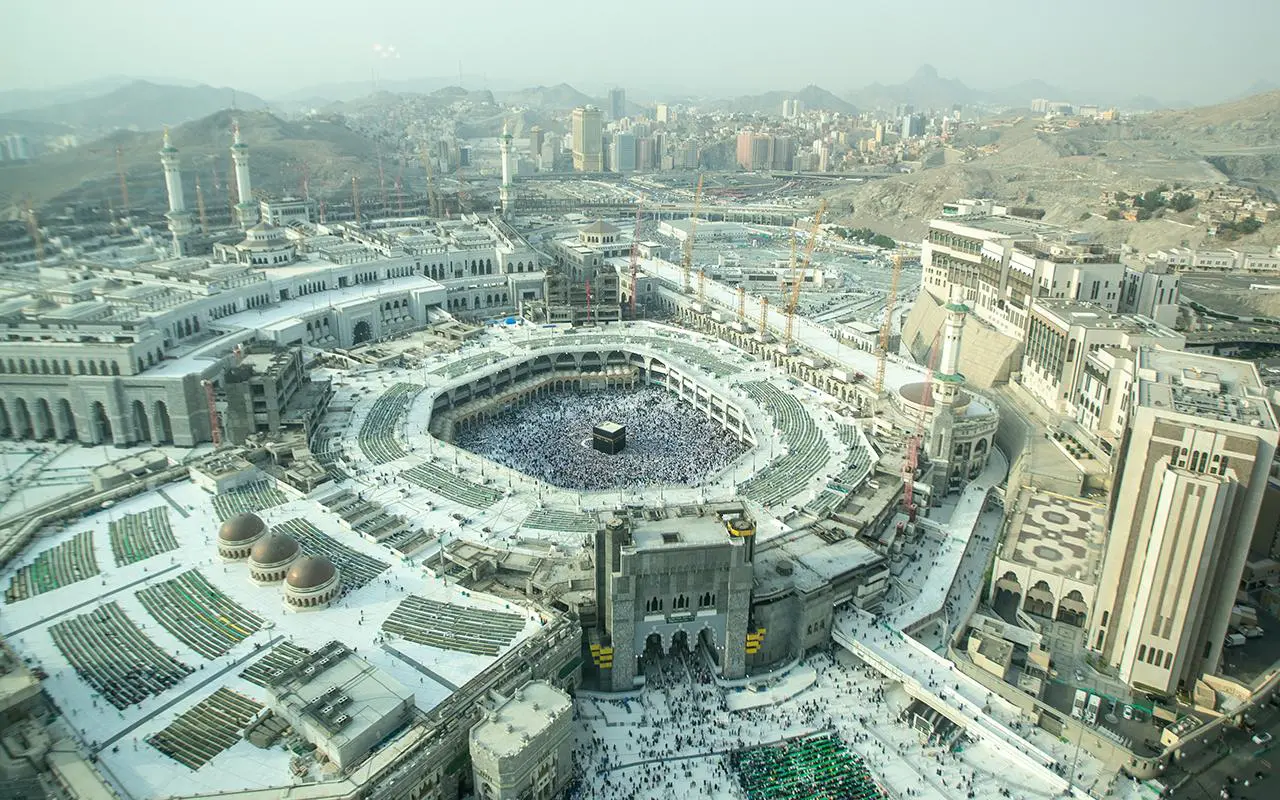
Al-Masjid al-Haram in Makkah
Landmarks That Shaped Makkah’s Memory
Al-Masjid al-Haram and the Noble Kaaba remain at the heart of the city, alongside Safa and Marwah and the sacred pilgrimage sites of Mina, Arafat, and Muzdalifah.
Makkah has also historically been associated with dozens of locations preserved in books of the Prophetic biography and works devoted to the history of the city. Among the most important sources documenting Makkah’s geography and landmarks is Akhbar Makkah by al-Azraqi, an important source for the study of the history of Makkah and the Grand Mosque.
What Did Makkah Give to the World?
Makkah did not give the world an industry, an army, or an administrative system as much as it gave it an idea.
From it the Qur’an went out to the world. From it emerged the earliest chapters of the Prophetic biography. From it came the Companions who carried Islam to distant lands. And toward it Muslims have continued to turn in their prayers and journey for Hajj.
Makkah’s influence, therefore, cannot be measured by its physical size, but by what its message produced.
What Was Makkah Known For?
Makkah al-Mukarramah: the place where revelation descended, the Qiblah of the Muslims, home of the Sacred House of Allah, and the cradle of the Islamic message.
And from here begins the series “Great Cities of Islam Through History” — from a city that was not the greatest of cities in terms of buildings or physical size, yet was the greatest in impact. From it began the story of an Ummah whose civilization would later extend from Madinah to Damascus, Baghdad, Cairo, Kairouan, and Córdoba, and onward to Bukhara, Samarkand, Timbuktu, Delhi, Istanbul, and many other great centers of the Muslim world.
Aslam Muhammad
Related Articles
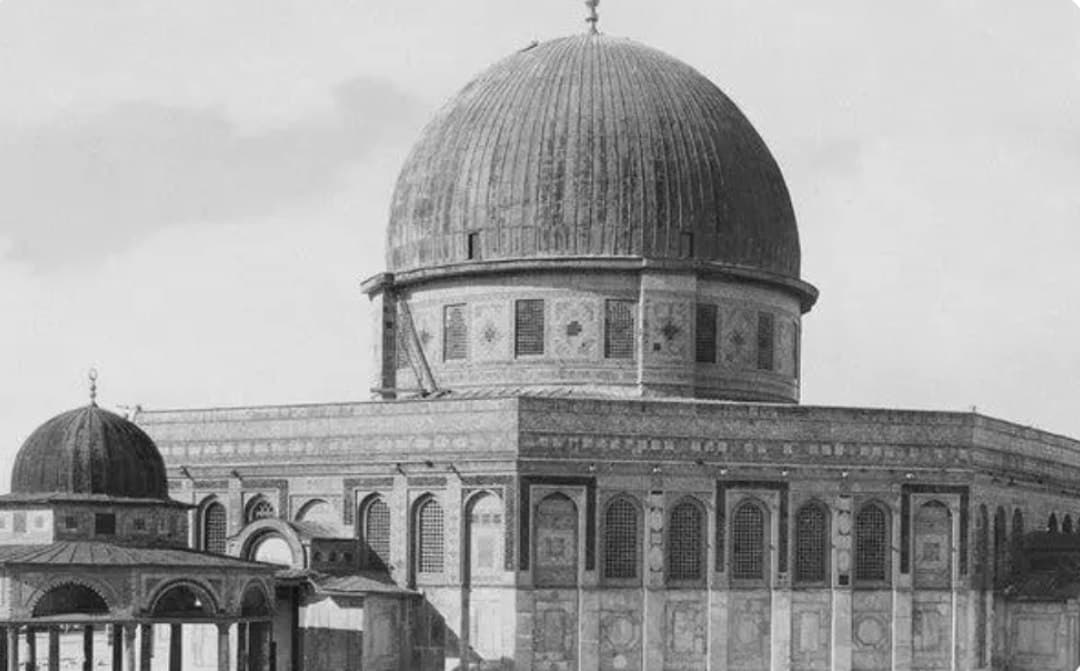
Great Cities of Islam Through History 3: Jerusalem — A City That Weeps for a Glory That Will Never Die
Great Cities of Islam Through History 3: Jerusalem — A City That Weeps for a Glory That Will Never Die
Lyla Hamdan
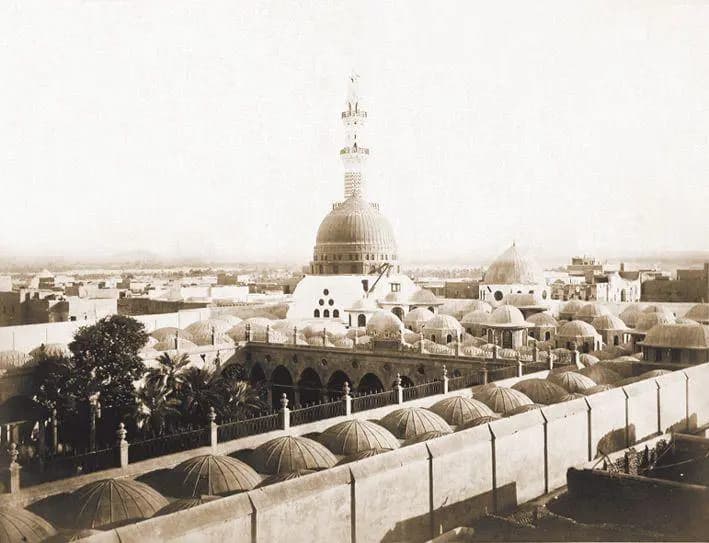
“Great Cities of Islam Through History 2”: Madinah — Where the First Islamic State Was Born
If Makkah is the cradle of revelation and the direction toward which Muslims pray, then Madinah is the place where the Islamic mission took shape as a state, a society, and a civilization. It was here that Islam moved from a period of persecution and vulnerability to the building of an Ummah. Here, the Prophet Muhammad ﷺ spent the final years of his life; from here, armies, envoys, letters, and messages were dispatched; here, the Companions gathered around the Messenger of Allah ﷺ; and from here emerged a state that would soon expand beyond the Hijaz and reach far into the wider world.
Lyla Hamdan