The Prophet ﷺ in Ramadan: The Role Model and the Perfect Example
Lyla HamdanInArticles|04/03/2026
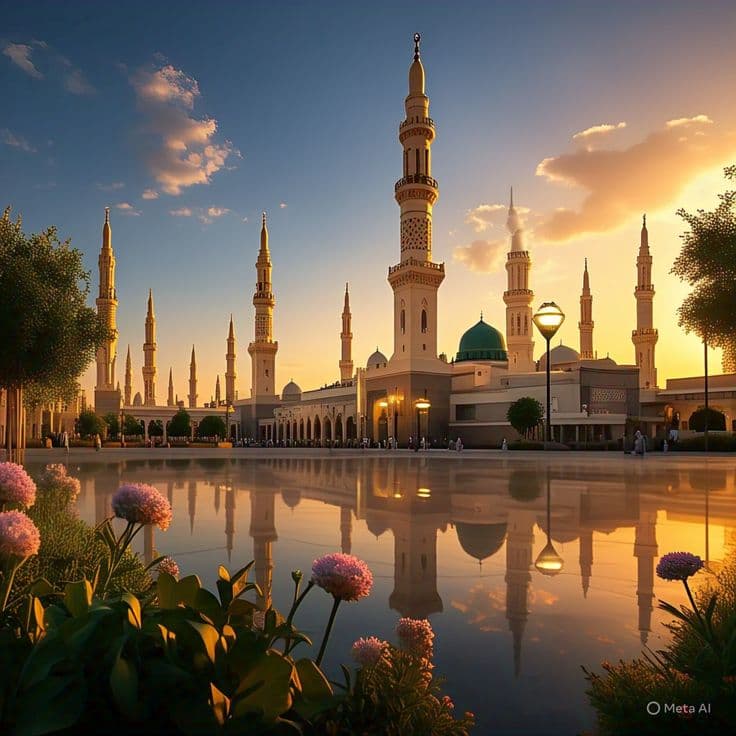
Ramadan is a blessed and great month, distinguished by Allah Almighty from all other months with its virtues and special characteristics. In this month, Allah revealed the Qur’an as guidance for people, mercy, and healing for the believers, as He said:
“The month of Ramadan [is that] in which the Qur’an was revealed as guidance for the people and clear proofs of guidance and criterion.” [Al-Baqarah: 185]
In this great month, the characteristics of the Prophet’s ﷺ worship and virtues were clearly manifested. For him, Ramadan was a school for the soul and the heart, illuminating the path for every Muslim who desires to draw closer to Allah Almighty.
Preparing for Ramadan
The Prophet ﷺ exerted his utmost effort to prepare for this great season before the month began. He fasted frequently in the month of Sha’ban and prepared his heart and soul for worship. He would inform his companions about the arrival of Ramadan, encourage them to seize its virtues in its days and nights, and explain the multiplied rewards and great opportunities in acts of worship and charity, fully appreciating the greatness of this season in attaining Allah’s pleasure.
Imam Ahmad narrated in his Musnad from the hadith of Abu Huraira (may Allah be pleased with him) that the Messenger of Allah ﷺ said, giving glad tidings to his companions:
“The month of Ramadan has come to you, a blessed month. Allah has made fasting obligatory upon you. In it, the gates of Paradise are opened, the gates of Hell are closed, and the devils are chained. It contains a night better than a thousand months. Whoever is deprived of its goodness is truly deprived.”
This hadith was authenticated by Shu’aib al-Arna’ut.
His ﷺ Fasting, Suhoor, and Iftar
The Prophet ﷺ was keen on following the Sunnah of suhoor (pre-dawn meal), delaying it until shortly before Fajr, encouraging his nation with the words:
“Take suhoor, for indeed there is blessing in it.”
As for iftar (breaking the fast), he ﷺ hastened it immediately after sunset, beginning with fresh dates; if none were available, he used dried dates, and if none, water. While breaking his fast, he would supplicate:
“Thirst is gone, the veins are moistened, and the reward is confirmed, if Allah wills.”
Whenever he broke the fast with others, he prayed for their goodness and thanked Allah for His blessings, emphasizing humility and gratitude to Allah Almighty.
Night Prayer and I’tikaf
The Prophet ﷺ would enliven the nights of Ramadan with prayer, remembrance, and Qur’anic recitation. He would pray long and often offered eleven rak’ahs, noting that he ﷺ did not usually exceed these except on special occasions. He encouraged his companions to pray Taraweeh behind the Imam, highlighting the virtue of those who pray with the Imam until he finishes, as if they had prayed the whole night.
During the last ten nights, the Prophet ﷺ would perform I’tikaf (spiritual retreat) in the mosque to devote himself to worship and seek Laylat al-Qadr, urging his companions to strive in these nights due to their immense virtue, for it is better than a thousand months.
Generosity and Charity
The Prophet ﷺ was the most generous of people, reaching the peak of generosity in Ramadan, especially when meeting Angel Jibreel (Gabriel) for Qur’anic study. He would give abundantly in charity and acts of kindness, making Ramadan a season of generosity, mercy, and giving.
His ﷺ Character in Ramadan
The Messenger of Allah ﷺ was the best in character, warning against bad conduct, especially while fasting, saying:
“Fasting is a shield, so when one of you is fasting, do not engage in obscene speech or ignorance.”
He encouraged his companions to maintain patience, gentleness, and moderation in dealing with others, reflecting the true spirit of Ramadan in God-consciousness and righteous deeds.
Ramadan in the Fields of Jihad
The Prophet ﷺ did not neglect his responsibilities during Ramadan. He led major battles and expeditions in this month, including the Battle of Badr and the Conquest of Makkah, giving Ramadan a historical and spiritual dimension—it is a month of both worship and striving in the cause of Allah.
Thus, the Prophet ﷺ in Ramadan was the perfect example in worship, piety, generosity, and character, a practical school for every Muslim seeking closeness to Allah. Following his ﷺ example in fasting, suhoor and iftar, night prayer, charity, character, and I’tikaf is the path to attaining Allah’s pleasure and bliss, as Allah Almighty said:
“Indeed in the Messenger of Allah you have a good example to follow for him who hopes in Allah and the Last Day and remembers Allah often.” [Al-Ahzab: 21]