Aspects of Following the Example of the Prophet ﷺ
Lyla HamdanInArticles|04/03/2026
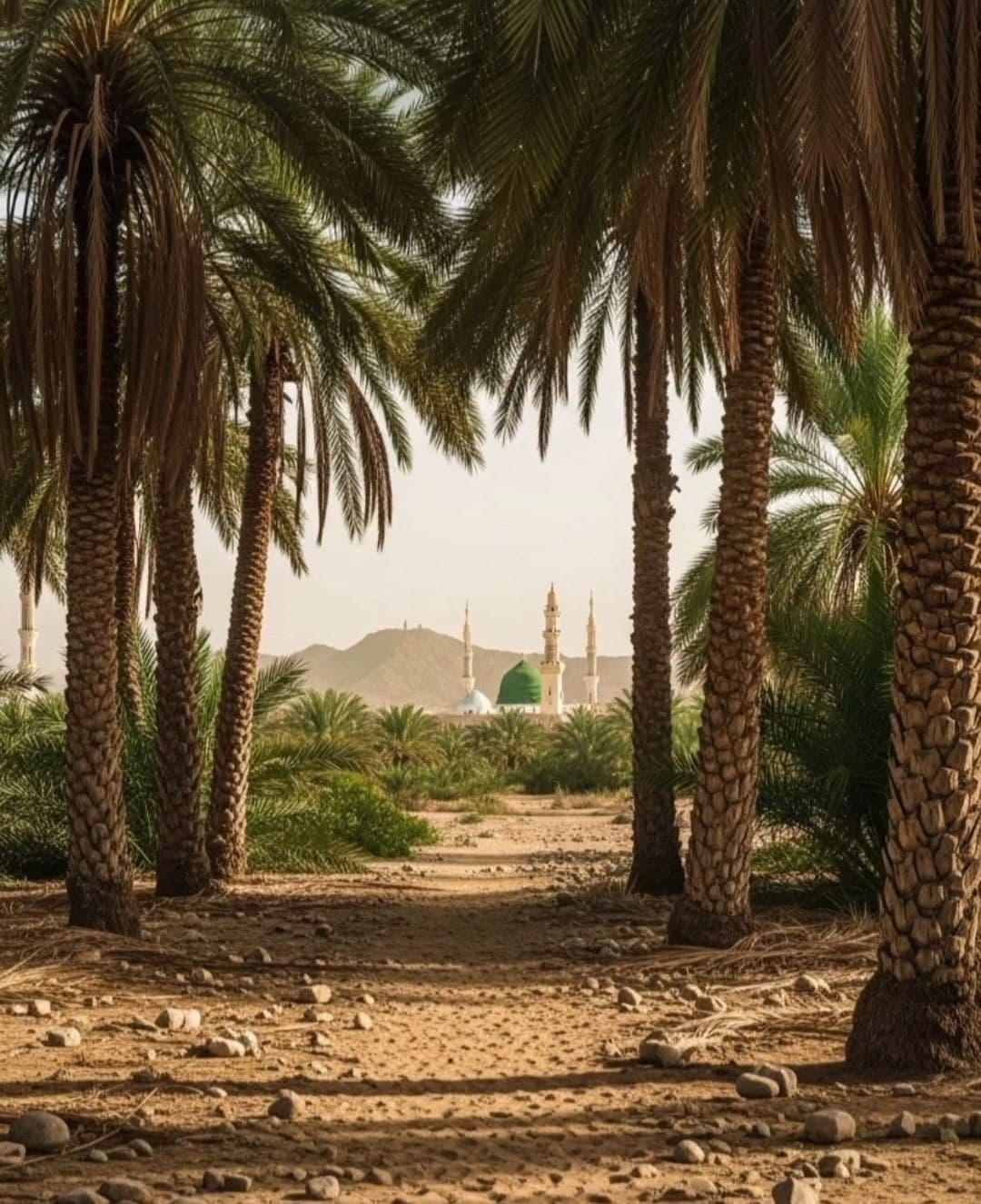
Anyone who reflects upon the life of the Prophet ﷺ will find that it encompasses all the noble manners that the most virtuous and honorable among humankind agreed upon.
He was the supreme example of good character.
Allah Almighty said:
“And indeed, you are of a great moral character.”
(Surah Al-Qalam, 68:4)
His character ﷺ was the Qur’an — he was pleased with what pleased it and angered by what angered it. He was neither obscene nor vulgar, nor one who shouted in the markets. He never repaid an evil with another evil but forgave and pardoned.
Safiyyah bint Huyayy رضي الله عنها said:
“I never saw anyone with better character than the Messenger of Allah ﷺ.”
And Anas رضي الله عنه said:
“By Allah, I served him for nine years, and never did I hear him say to something I did: ‘Why did you do that?’ nor to something I neglected: ‘Why didn’t you do that?’”
Anas رضي الله عنه also said:
“The Messenger of Allah ﷺ was one of the best of people in character. He sent me one day on an errand, and I said: ‘By Allah, I will not go,’ but deep down I intended to go where he had ordered me. I passed by some boys playing in the market when suddenly the Messenger of Allah ﷺ grabbed me from behind by my neck. I turned and saw him smiling. He said, ‘O Anas, did you go where I told you?’ I said, ‘Yes, I am going, O Messenger of Allah.’”
An Example in Forbearance and Forgiveness
Allah Almighty said:
“So by mercy from Allah, you were lenient with them. And if you had been rude [in speech] or harsh in heart, they would have disbanded from about you.”
(Surah Aal Imran, 3:159)
Anas رضي الله عنه narrated:
“I was walking with the Prophet ﷺ while he was wearing a thick cloak from Najran. A Bedouin came and pulled it harshly until I saw the marks on the Prophet’s neck from the edge of his cloak. Then he said, ‘O Muhammad! Command that I be given something from Allah’s wealth that you have!’ The Prophet ﷺ turned to him, smiled, and ordered that he be given something.”
An Example in Modesty
Abu Sa‘id al-Khudri رضي الله عنه said:
“The Prophet ﷺ was more modest than a virgin in her private chamber. When he saw something he disliked, we could see it in his face.”
An Example in Compassion and Mercy
Allah Almighty said:
“And We have not sent you except as a mercy to the worlds.”
(Surah Al-Anbiya, 21:107)
Abu Dharr رضي الله عنه narrated:
“The Messenger of Allah ﷺ prayed one night reciting a single verse until morning, bowing and prostrating with it:
‘If You punish them, indeed they are Your servants; but if You forgive them, indeed it is You who is the Exalted in Might, the Wise.’ (Surah Al-Ma’idah, 5:118)
When morning came, I said, ‘O Messenger of Allah, you recited this verse all night, bowing and prostrating with it!’
He replied, ‘I asked my Lord for intercession for my ummah, and He granted it to me — and, if Allah wills, it will be granted to whoever does not associate anything with Allah.’”
Malik ibn al-Huwayrith (may Allah be pleased with him) said:
“I came to the Prophet ﷺ with a group from my tribe, and we stayed with him for twenty nights. He was kind and gentle. When he noticed our longing for our families, he said: ‘Return to your people, stay among them, teach them, and pray. When the time for prayer comes, let one of you call the adhan, and let the eldest among you lead the prayer.’”
An Example in Loyalty and Keeping Promises
ʿAʾishah (may Allah be pleased with her) said:
“I never felt more jealous of any of the wives of the Prophet ﷺ than I did of Khadijah, although I never saw her. But the Prophet used to mention her often. Sometimes he would slaughter a sheep, cut it into pieces, and send it to Khadijah’s friends. I once said to him: ‘It is as if there was no other woman in the world except Khadijah!’ He replied: ‘She was (such and such), and I had children from her.’”
An Example in Humility
Allah, the Exalted, said to His Prophet:
“And lower your wing to those who follow you among the believers.”
(Ash-Shu‘ara: 215)
Meaning: be gentle and kind with them. Allah commanded His Prophet ﷺ to be humble, lenient, and compassionate toward the poor and other Muslims.
He would pass by children and greet them. A young girl would take his hand and lead him wherever she wished. He would mend his own sandals, patch his clothes, milk his sheep, sit with the poor, walk with widows and orphans to fulfill their needs, accept invitations even to simple meals, visit the sick, attend funerals, ride donkeys, and respond to the call of a servant.
An Example in Courage
ʿAli ibn Abi Talib (may Allah be pleased with him) said:
“When the battle of Badr became fierce, we sought protection by the Messenger of Allah ﷺ, and he was the closest of us to the enemy and the bravest among us.”
Al-Baraʾ ibn ʿAzib said:
“By Allah, when the battle became intense, we would shield ourselves behind the Prophet ﷺ, and indeed the bravest among us was he who stood beside him.”
Anas ibn Malik (may Allah be pleased with him) said:
“The Messenger of Allah ﷺ was the best of people, the most generous of people, and the bravest of people. One night, the people of Madinah were frightened by a sound, so they went out to investigate, and the Messenger of Allah ﷺ met them on his way back—he had reached the source of the noise before them. He was riding a horse belonging to Abu Talhah without a saddle, with his sword around his neck, saying: ‘Do not be afraid, do not be afraid.’ He added: ‘We found it (the horse) to be fast—truly, it is swift.’ The horse had been known to be slow, but by his blessing it became swift.”
An Example in Generosity and Kindness
Ibn ʿAbbas (may Allah be pleased with him) said:
“The Messenger of Allah ﷺ was the most generous of people, and he was even more generous during Ramadan when Jibreel would meet him. Jibreel used to meet him every night in Ramadan to study the Qur’an with him, and the Messenger of Allah ﷺ was more generous in doing good than the blowing wind.”
Jabir ibn ʿAbdullah said:
“The Prophet ﷺ was never asked for anything and said, ‘No.’”
Anas ibn Malik reported:
“The Messenger of Allah ﷺ was never asked for anything for the sake of Islam without giving it. A man once came to him, and the Prophet gave him a flock of sheep between two mountains. The man returned to his people and said: ‘O my people, embrace Islam! For Muhammad gives as if he does not fear poverty.’”
An Example in Fear and Reverence of Allah
Mutarrif narrated from his father that he said: “I saw the Messenger of Allah ﷺ praying, and in his chest there was a sound like the rumbling of a millstone, due to his weeping.”
Ibn ʿAbbas narrated that Abu Bakr (may Allah be pleased with him) said: “O Messenger of Allah, you have become old!” He replied: “Hud, Al-Waqiʿah, Al-Mursalat, ‘Amma Yatasa’alun, and Idha Ash-Shamsu Kuwwirat have made me old.”
An Example in Asceticism and Detachment from Worldly Pleasures
ʿUmar (may Allah be pleased with him) entered upon the Prophet ﷺ and found him lying on a mat with no bedding between it and him, and under his head was a leather pillow stuffed with palm fibers. Near his head hung some tanned hides. ʿUmar said: “I saw the marks of the mat on his side, so I wept.” The Prophet ﷺ said: “Why are you weeping?” ʿUmar replied: “O Messenger of Allah, Chosroes and Caesar are enjoying their luxury, while you are the Messenger of Allah!” He said: “Aren’t you pleased that for them is this world, and for us is the Hereafter?”
And while he encouraged his companions to abstain from the world and focus on the Hereafter, he himself performed Hajj riding on a worn-out saddle and a coarse woolen cloak worth no more than four dirhams.
An Example in Steadfastness and Certainty in Allah’s Promise
Al-Bukhari (2864) and Muslim (1776) narrated from Abu Ishaq, from Al-Bara’ (may Allah be pleased with him), that a man said to him: “O Abu ʿUmara, you fled on the Day of Hunayn!” He replied: “No, by Allah, the Prophet ﷺ did not flee! But some of the hastier ones did. The tribe of Hawazin met them with arrows, while the Prophet ﷺ was on his white mule, and Abu Sufyan ibn al-Harith was holding its bridle. The Prophet ﷺ was saying: ‘I am the Prophet, no lie! I am the son of ʿAbd al-Muttalib!’”
An Example in Patience with People and Forgiving the Offender
He was described in the Torah as: “He is not harsh, nor hard-hearted, nor loud in the markets. He does not repay evil with evil, but rather pardons and forgives.”
An Example in Frequent Seeking of Forgiveness and Repentance
Abu Hurayrah (may Allah be pleased with him) narrated that the Messenger of Allah ﷺ said: “By Allah, I seek forgiveness from Allah and repent to Him more than seventy times a day.”
An Example in Worship
ʿAishah (may Allah be pleased with her) said: “The Prophet ﷺ used to stand (in prayer) at night until his feet became swollen. I said to him: ‘O Messenger of Allah, why do you do this when Allah has forgiven your past and future sins?’ He said: ‘Shall I not then be a grateful servant?’”
ʿUbayd ibn ʿUmayr narrated that he said to ʿAishah: “Tell us about the most wondrous thing you saw from the Messenger of Allah ﷺ.” She paused for a while and then said: “One night he said: ‘O ʿAishah, let me worship my Lord tonight.’ I said: ‘By Allah, I love your closeness, but I also love what pleases you.’ She said: ‘So he stood, performed ablution, and prayed. He kept weeping until his lap was wet with tears. Then he continued weeping until his beard was soaked. Then he continued weeping until the ground beneath him was wet. Then Bilal came to call him to prayer. When he saw him weeping, he said: ‘O Messenger of Allah, why do you weep, while Allah has forgiven your past and future sins?’ He replied: ‘Shall I not be a grateful servant? Tonight, a verse has been revealed to me—woe to the one who recites it and does not reflect upon it: “Indeed, in the creation of the heavens and the earth and the alternation of the night and the day are signs for those of understanding.” [Āl ʿImrān: 190]’”
During the month of Ramadan, the Prophet’s ﷺ guidance was to increase in all forms of worship. He would give much in charity, perform acts of kindness, recite the Qur’an abundantly, engage in prayer, remembrance, and seclusion (iʿtikāf).
As for voluntary fasting, he would fast until it was said, “He never breaks his fast,” and break his fast until it was said, “He never fasts.” He never completed the fast of a full month other than Ramadan, and he used to fast more in Shaʿbān than in any other month. He was keen to fast on Mondays and Thursdays.
In his recitation of the Qur’an, he would recite it with measured tones, neither hastily nor monotonously. He would articulate every letter distinctly, pausing at each verse. When he recited words containing prolongation, he would extend them properly — for instance, prolonging ar-Raḥmān and ar-Raḥīm. He would seek refuge in Allah from the accursed devil at the start of his recitation, saying, “I seek refuge in Allah from the accursed Satan,” and sometimes, “O Allah, I seek refuge in You from the accursed Satan — from his madness, arrogance, and poetry.” He had a regular portion (ḥizb) of the Qur’an that he never neglected.
He would recite the Qur’an while standing, sitting, reclining, in a state of purity or otherwise. Nothing would prevent him from reciting it except the state of major impurity.
He was also a model in remembrance of Allah.
The Prophet ﷺ was the most perfect of creation in remembering Allah, the Exalted. He would remember Allah in all his states — standing, sitting, walking, riding, and at rest.
He called for following his example in prayer, fasting, and marriage.
Anas ibn Mālik reported: Three men came to the houses of the wives of the Prophet ﷺ asking about his worship. When they were informed, they considered it little and said, “Where are we compared to the Prophet ﷺ, when Allah has forgiven his past and future sins?”
One said, “As for me, I will pray every night without rest.”
Another said, “I will fast continuously and never break my fast.”
The third said, “I will stay away from women and never marry.”
The Messenger of Allah ﷺ came to them and said:
“Are you the ones who said such and such? By Allah, I am the most fearful of Allah among you and the most pious, yet I fast and break my fast, I pray and I sleep, and I marry women. Whoever turns away from my Sunnah is not from me.”
Ibn Ḥajar said: “Whoever turns away from my Sunnah is not from me” means: whoever abandons my way and adopts another path is not of my followers. The Prophet’s way ﷺ was the pure, easy monotheism — he would break his fast to strengthen himself for fasting, sleep to strengthen himself for night prayer, and marry to guard chastity and increase offspring.
This ḥadīth shows the importance of observing the lives of the righteous to emulate their actions, and that showing righteous deeds for good example is not blameworthy when free of ostentation.
He was a model in Hajj.
Hajj is among the clearest acts of worship in which following the Prophet ﷺ becomes manifest. He said:
“Take your rituals from me, for I do not know whether I shall perform Hajj after this one.”
Following the Prophet ﷺ is not limited to spiritual traits, but extends to his practical way of life — for his guidance was the most complete and perfect model.
In food and drink, he would not reject what was available nor overburden himself for what was missing. Whatever wholesome food was brought to him, he ate it. He never criticized food; if he desired it, he ate, and if not, he left it. He would see the crescent moon once, then twice, then thrice, and no fire would be lit in his home (i.e., no cooked food).
When food was brought to him, he would say, “In the name of Allah.” When he finished, he would say:
“O Allah, You have fed and given drink, enriched and satisfied, guided and given life. To You belongs all praise for what You have given.”
When he ate with people, he would not leave until he prayed for them.
He ate whatever was available; when he lacked food, he was patient — to the point that he would tie stones on his stomach out of hunger. He did not disdain eating with anyone, young or old, free or slave, Bedouin or emigrant.
In sleep and waking:
When he needed to sleep, he would lie on his right side remembering Allah, without having filled his stomach with food or drink.
When he wished to sleep, he placed his hand under his head and said:
“O Allah, protect me from Your punishment on the Day You resurrect Your servants.”
When he awoke to the call, he would praise and glorify Allah, declare His greatness and oneness, supplicate to Him, use the miswak, perform ablution, and then stand in prayer before his Lord — conversing with Him, praising Him, hoping in Him, and fearing Him.
He sometimes slept on a bed, sometimes on a mat, sometimes on the ground, and sometimes on a raised couch.
A Model in His Speech, Silence, Laughter, and Tears
When he spoke, his words were clear, distinct, and well-articulated — so much so that they could be counted by those listening. He was neither hasty and unclear, nor slow and fragmented; rather, his manner of speaking was the most perfect and balanced.
He often repeated his words three times so that they would be well understood, and when he greeted others with peace, he did so three times.
He was often silent — he would not speak without need, and when he did, his words were concise and comprehensive, neither excessive nor deficient. He never spoke of what did not concern him and spoke only about what he hoped would earn him reward. If he disliked something, it could be seen on his face.
Most of his laughter was a gentle smile — in fact, all of it was smiling. His laughter never went beyond showing his molar teeth.
He would laugh at things that were truly worthy of laughter — things that were astonishing or unusual.
As for his tears, they were like his laughter: without sobbing or loud cries, just as his laughter was without loud bursts. His eyes would shed tears until they flowed freely, and a faint sound could be heard from his chest, like the boiling of a pot.
He wept at times out of mercy for the deceased, at times out of fear for his Ummah and compassion toward them, at times out of awe and fear of Allah, and at times when hearing the Qur’an — tears of longing, love, reverence, and humility before Allah.
When his son Ibrāhīm died, his eyes filled with tears and he wept out of mercy for him. He also cried when he saw one of his daughters breathing her last.
He wept when Ibn Masʿūd recited to him Sūrat an-Nisā’.
He wept when ʿUthmān ibn Maẓʿūn died, and he wept when the sun was eclipsed, praying the eclipse prayer while tears streamed from his eyes and sighs escaped his chest.
He wept as he sat beside the grave of one of his daughters, and at times he would cry during his night prayer.
A Model in His Sermons
When he delivered a sermon, his eyes would redden, his voice would rise, and his anger would intensify — as though he were warning an army of imminent danger. He never gave a sermon without beginning it with praise of Allah.
The core of his sermons was always the praise of Allah — glorifying Him for His blessings and attributes of perfection, teaching the fundamentals of Islam, mentioning Paradise and Hell, reminding of the Hereafter, calling to the fear of Allah, and explaining what leads to His anger or His pleasure.
He would address his audience according to their needs and circumstances. Sometimes his sermons were brief, sometimes lengthy — depending on what was most beneficial for the people.
A Model in Dealings and Transactions
He was the best of people in his dealings.
The Messenger of Allah ﷺ bought and sold, rented and hired, entered partnerships with others, and conducted business with honesty and fairness. When one of his former partners once said to him, “Do you remember me?” he replied, “Were you not my partner? Indeed you were — an excellent partner: you neither argued nor deceived.”
He would give gifts and accept them, and he would reciprocate them with gratitude. He borrowed with or without collateral, lent items, and purchased goods both in cash and on credit.
When he borrowed something, he would repay with something better and make supplication for the lender, saying:
“May Allah bless your family and your wealth; the only reward for a loan is gratitude and repayment.”
The Messenger of Allah ﷺ dedicated a piece of land he owned as a charitable endowment (waqf) for the sake of Allah.
He interceded for others and accepted intercession. When Barīrah declined his intercession regarding her husband Mughīth, he did not become angry or reproach her — for he was the perfect example and role model.
He swore more than eighty times, and Allah Almighty commanded him to swear in three instances.
Sometimes he would make an exception in his oath, sometimes he would atone for it, and sometimes he would fulfill it.
He used to joke, but he only spoke the truth in his joking. He would use double meanings, but never except in truth.
The Messenger of Allah ﷺ raced on foot, and wrestled.
He mended his own sandals with his hands, patched his own clothes, repaired his bucket, milked his sheep, picked lice from his garment, served himself and his family, carried bricks with his companions while building the mosque, hosted guests, and accepted invitations.
He would visit the sick, attend funerals, respond to invitations, and walk with widows, the poor, and the weak to fulfill their needs. He listened to poetry in praise of him and rewarded it.
A Role Model in Visiting the Sick
He used to visit his sick companions, and once visited a boy who used to serve him and was from the People of the Book. He also visited his uncle while he was still a polytheist, and invited both to Islam — the Jewish boy accepted, but his uncle did not.
He would draw near to the sick person, sit by his head, and ask, “How do you feel?”
He would wipe the patient with his right hand and say:
“O Allah, Lord of mankind, remove the harm and heal him. You are the Healer. There is no healing except Your healing — a healing that leaves no illness behind.”
A Role Model in the Natural Dispositions (Sunan al-Fitrah)
He liked to begin with his right hand in putting on shoes, combing his hair, performing ablution, and taking or giving things. His right hand was for eating, drinking, and purification; his left for removing impurity and similar acts.
His guidance regarding shaving the head was either to shave it completely or to leave it completely; he would not shave part of it and leave part.
He loved the use of the siwak (tooth-stick) and used it while fasting and not fasting, upon waking, at ablution, prayer, and when entering his home.
He used perfume frequently, loved it, and never refused it.
He loved grooming his hair — sometimes he combed it himself, and sometimes ʿĀ’ishah did it for him.
Let Muslims today reflect on their condition and take the Messenger of Allah ﷺ and his Companions as their highest example — not actors, actresses, so-called thinkers, or Western figures.
At this point, it is important to clarify: Which actions of the Prophet ﷺ are to be followed?
The Prophet’s Actions Fall into Four Categories:
1. Innate Human Actions (Jibillī):
These are actions he did as a human being, not as a prophet — such as walking, sitting, eating, drinking, and sleeping. These are neither commanded nor forbidden.
However, if he regularly performed a natural act in a specific manner, it becomes recommended — such as sleeping on his right side.
If there is a saying encouraging such an act, it is likewise recommended, such as breathing three times while drinking, or eating with the right hand.
2. Customary Actions of His People:
These are actions conforming to the norms of his people, without evidence linking them to worship — like clothing style.
He did not change his pre-prophethood clothing but merely set guidelines for modest dress for men and women.
Thus, these are not considered acts of worship unless he explicitly commanded or praised them — such as wearing white garments or shortening the lower garment above the ankles.
3. Actions Specific to Him:
These are actions that apply only to him — such as continuous fasting (without breaking), marrying more than four wives, or marrying without dowry. There is no imitation in these acts.
4. Acts of Worship (ʿIbādah):
These are acts done purely for the sake of Allah. These are the ones we are commanded to emulate.
They may be obligatory or recommended.
Alongside following him in actions, one should also follow him in abstentions (turūk) — the things he deliberately refrained from.
We know his abstentions in two ways:
- When it is explicitly reported that he refrained from something — such as the report that he performed the Eid prayer without call to prayer or iqāmah.
- When none of his companions ever reported an act that would have certainly been transmitted if he had done it — for example, uttering an intention aloud before prayer.
Thus, his refraining from an act is evidence that it is not prescribed — unless the reason for abstention was temporary, such as his not leading Taraweeh in congregation for fear that it might become obligatory. In that case, the example lies in doing it, not in leaving it, since the reason no longer exists.
(From “How the Prophet ﷺ Dealt with Them” by Shaykh Muhammad Ṣāliḥ al-Munajjid)