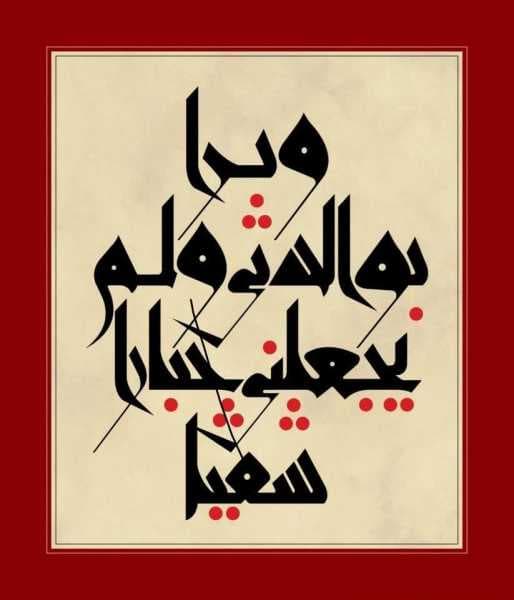
And Dutiful to My Mother
Lyla HamdanInFor New Muslims|04/19/2026
By Mustafa Al-Hadi
I used to wonder about the reason why God Almighty described Jesus (peace be upon him) by saying: “And dutiful to my mother, and He did not make me arrogant and miserable.” (1) What had happened for God to convey this description of Jesus?
After reflection, I thought: why not turn to the Gospel and examine how Jesus’ relationship with his mother, the righteous Mary, the Virgin (peace be upon them both), is portrayed? We are accustomed, through the Qur’an, to seeing it correct what has been reported about the prophets and their messages. That is why God describes the Qur’an as “a guardian over it (previous scriptures)”:
“And We have revealed to you the Book in truth, confirming what came before it of the Scripture and as a guardian over it.” (2)
The term “guardian” (muhaymin) in Arabic refers to that which is entrusted with previous scriptures—acting as a vigilant overseer, a just judge, and a faithful preserver of all that came before. For this reason, God has guaranteed the preservation of the Qur’an, since it carries the trust of previous revelations; therefore it must be protected from distortion. As He says:
“Indeed, it is We who sent down the Reminder, and indeed, We will be its guardian.” (3)
I returned to the Gospel and examined the passages concerning Jesus’ relationship with his mother. At that point, I understood why the Qur’an describes Jesus as “dutiful to his mother.” This stands in contrast to how the Gospel portrays him—as being undutiful and lacking respect toward her in front of others. It even depicts him speaking to her harshly and dismissively when she sought to see him and be reassured about him, and when she asked him to provide wine for the guests. As reported in the Gospel of John:
“There was a wedding in Cana of Galilee, and the mother of Jesus was there… When the wine ran out, the mother of Jesus said to him, ‘They have no wine.’ Jesus said to her, ‘Woman, what does this have to do with me? My hour has not yet come.’” (4)
A second point is that the Gospel portrays Jesus as neglecting his mother—neither inquiring about her nor visiting her—while Mary, the holy one, longed for him and searched for him. It even describes her going through the streets seeking to see her only son, as narrated:
“Then his mother and his brothers came to him, but they could not reach him because of the crowd. And it was told him, ‘Your mother and your brothers are standing outside, desiring to see you.’” (5)
Yet he refused to go out to them, and replied:
“My mother and my brothers are those who hear the word of God and do it.” (6)
Glory be to God—who on earth was more faithful, more devoted, and more attentive to God’s word than Mary, the Virgin? She is the one whom the Qur’an describes:
“O Mary, be devoutly obedient to your Lord, prostrate and bow with those who bow.” (7)
Due to her modesty, Mary would not go out alone; rather, she would take along the sons of Joseph the carpenter, her relative, and walk through the streets searching for her son Jesus to be reassured about him. One day, she found him at a wedding performing miracles—providing wine when it had run out. She stood outside and sent someone to call him so she could see him. She persisted, sending several people to request to see her son, but Jesus continued speaking and paid no attention:
“While he was speaking to the crowds, behold, his mother and his brothers stood outside, asking to speak to him. But he replied, ‘Who is my mother, and who are my brothers?’ And stretching out his hand toward his disciples, he said, ‘Here are my mother and my brothers.’” (8)
On another occasion, his mother insisted on seeing him to ensure whether he was alive or not. When she persisted, Jesus came out seemingly upset and addressed her in front of the crowd:
“Woman, what does this have to do with me? My hour has not yet come.” (9)
Then he laid down his well-known and perplexing statement, over which commentators have long differed:
“If anyone comes to me and does not hate his father and mother, wife and children, brothers and sisters—yes, even his own life—he cannot be my disciple.” (10)
Glory be to God—where is the maintaining of family ties, compassion toward believers, and dutifulness to parents? Was not his mother Mary a believer—indeed, among the best of the women of her time and among the women of Paradise? Where is this in relation to the Qur’anic command to show kindness to parents even if they strive to lead one to disbelief:
“But if they strive to make you associate with Me that of which you have no knowledge, do not obey them, but accompany them in this world with kindness.” (11)
Is it kindness or fairness to address one’s mother harshly by saying, “What have I to do with you, woman?” when God’s decree commands honoring parents:
“Your Lord has decreed that you worship none but Him, and that you show kindness to parents… do not even say ‘uff’ to them, nor repel them, but speak to them a noble word.” (12)
Thus, the secret behind the Qur’anic description of Jesus as “dutiful to his mother” becomes clear—contrary to how the Gospel portrays him. The Gospel itself describes the emotional pain this caused Mary, as she reproaches her son:
“My son, why have you treated us so? Your father and I have been anxiously searching for you.” (13)
Perhaps one of the strangest matters is that a prophet guided by revelation—such as Jesus—would be unaware that his own scripture forbids mistreating or disrespecting one’s parents. We read clearly:
“Every one of you shall revere his mother and his father… Whoever curses his father or his mother shall surely be put to death… Whoever strikes his father or his mother shall surely be put to death.” (14)
These texts contain severe rulings, even permitting punishment against those who harm their parents. Yet the same book portrays Jesus as being undutiful to his mother, seemingly unaware of its own teachings.
From all of this, we understand that the Qur’an conveys a very important message:
Whoever mistreats his parents, fails to honor them, and neglects righteousness toward them is among the tyrants in this world—and among the wretched in the Hereafter.
References:
- Surah Maryam (19), verse 32.
- Surah Al-Ma’idah (5), verse 48.
It has been reported in Sunni sources from Ali ibn Abi Talib (peace be upon him) that he said the Qur’an contains knowledge of those who came before us. This hadith was narrated by Al-Tirmidhi (Hadith no. 2906, vol. 5, p. 172), Al-Darimi (2/526/3331), Al-Bazzar (3/71–73/836), and Al-Bayhaqi in Shu‘ab al-Iman (2/325–326/1935–1936), on the authority of Al-Harith, who said:
“I passed by the mosque while people were engaged in discussions of hadith. So I went to Ali ibn Abi Talib and said: ‘O Commander of the Faithful, do you not see that people have engaged in (confused) discussions?’ He said: ‘Have they done so?’ I said: ‘Yes.’ He said: ‘Indeed, I heard the Messenger of God (peace and blessings be upon him) say:
‘There will be tribulation.’
I asked: ‘What is the way out of it, O Messenger of God?’ He said:
‘The Book of God: in it is the news of those before you, the information of what will come after you, and the judgment between you. It is the decisive word, not jest. Desires do not deviate it, tongues do not confuse it, scholars never tire of it, and its wonders never cease. The jinn did not finish hearing it before they said: “Indeed, we have heard a wondrous Qur’an that guides to the right path.”’” - Surah Al-Hijr (15), verse 9.
- Gospel of John 2:1–4.
- Gospel of Luke 8:19–20.
The phrase “your brothers” in the Gospel refers to his brothers from Joseph the carpenter, in whose household he was raised. - Gospel of Luke 8:21.
- Surah Aal ‘Imran (3), verse 43.
- Gospel of Matthew 12:46.
- Gospel of John 2:4.
Jesus’ statement to his mother, “My hour has not yet come,” indicates that he was aware of the reason for her concern—that she feared for his life. His response, as portrayed, appears regrettably dismissive or mocking. - Gospel of Luke 2:48–51.
- Surah Luqman (31), verse 15.
- Surah Al-Isra (17), verse 23.
- Gospel of Luke 2:48.
- Book of Leviticus 19:3; 20:9, and Book of Exodus 21:15.